
Belgium
Cities
Antwerp
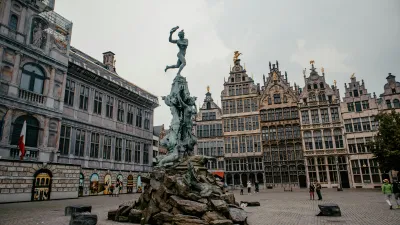
Antwerp is the second largest city in Belgium, set in the northern region of Flanders. About 500,000 people live in the city itself and around 1.2 million in the wider agglomeration. Thanks to its seaport it was Europe's richest and most important trading town in the 16th century, as well as a major cultural centre and home to artists such as Rubens and van Dyck. Although it suffered heavy damage in both world wars, its historic centre survived largely intact, with monuments and artworks spanning the Late Middle Ages, Renaissance, Baroque, Art Nouveau and Art Deco, including the Cathedral of Our Lady, St. Paul's Church and the Plantin-Moretus Museum. Antwerp is also the world's leading diamond trading centre, with more than half of all rough and cut diamonds handled here through four exchanges, over 1,500 diamond companies and a diamond museum. The trade has been dominated for centuries by Orthodox Jews, drawn by Belgium's religious tolerance, which has earned the city the nickname the Jerusalem of the West. The city is equally renowned for fashion: in the 1980s the Antwerp Six, graduates of the Royal Academy of Fine Arts including Walter Van Beirendonck, Dries van Noten and Dirk Bikkembergs, shot the city to the centre of international fashion with their unconventional, avant-garde designs, a reputation it still holds today.
Brussels
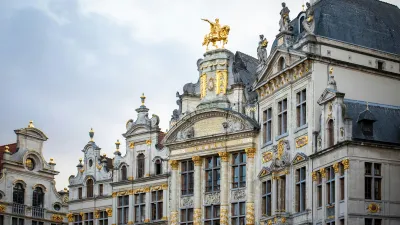
Brussels has been the capital of the Kingdom of Belgium since the country became independent in 1830. It is home to the headquarters of the European Union and NATO and to the World Customs Organization, so international companies, associations, cultural institutions, embassies and the global press gather here. The result is a major economic, scientific and cultural centre with a cosmopolitan feel, reinforced by immigrants from the former Belgian colony of Congo and by the descendants of guest workers from Morocco and Turkey. Architecture lovers should start at the Grand Place (Grote Markt), with its Gothic town hall and baroque facades. It is regarded as one of the most beautiful squares in the world and has been a UNESCO World Heritage Site since 1998. Other highlights include the Cinquantenaire park and its triumphal arch, the Stock Exchange, the Palace of Justice and the many well-preserved art nouveau buildings across the city, most famously those by Victor Horta. The Comic Museum, celebrating Brussels as the capital of Belgian comics (Tintin, the Smurfs, Lucky Luke, Marsupilami), fittingly sits in a former Horta-designed art nouveau department store. Belgium was among the most conservative countries in Europe towards gay people until the mid-1990s, then became one of the most progressive on gay rights within just a few years. The first Gay Pride march in Brussels took place more than 25 years after the Stonewall riots in New York. Today gays and lesbians in Belgium enjoy better legal protection and greater self-confidence than in many other countries, which gives the capital a relaxed and open atmosphere for LGBTQ+ visitors.