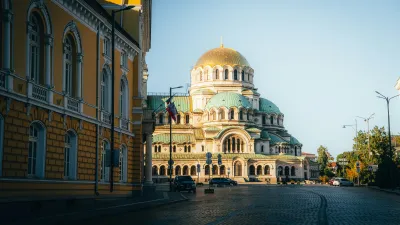
Home Bulgaria Bulgaria Cities Cities Sofia Bulgaria’s capital is one of Europe’s oldest cities. Founded as ancient Serdica, it has more than two millennia of history layered beneath its streets, and Roman ruins sit right beside the metro. The city’s landmark is the gold-domed Alexander Nevsky Cathedral. Nearby you’ll find the 4th-century Rotunda of St George and the UNESCO-listed Boyana Church with its medieval frescoes. Its tree-lined boulevards mix Ottoman, Soviet-era and modern architecture, and Vitosha Boulevard is the lively spine of cafés and shops. The best part is that Vitosha Mountain rises right at the city’s edge, so you can go hiking or skiing just half an hour from the centre. Add mineral springs, an easy day trip to Rila Monastery, and generous plates of shopska salad and banitsa with a glass of rakia, all at prices well below most European capitals. The gay scene is small but well established for Eastern Europe. It has no gay district, and its venues are scattered across the city centre within easy reach of each other. Nightlife is driven more by parties than by neighbourhood. Club Asylum and VAULT are the main places for late-night dancing and drag shows, and smaller bars such as Tell Me are good for a relaxed drink. Venues open and close fairly often, so check social media before heading out. Sofia is generally safe in central areas, but Bulgaria is still socially conservative and doesn’t recognise same-sex partnerships, so many locals are discreet outside of queer spaces. The highlight of the year is Sofia Pride in June. Held every year since 2008, it is the country’s largest LGBTQ+ event, both a celebration and a march for equal rights. It usually opens with a concert in the city centre before the parade sets off through central Sofia. Thousands take part each year, and support from local NGOs and many foreign embassies makes it a powerful moment of visibility in a city where the community is growing more confident every year.
Cities Sofia Bulgaria’s capital is one of Europe’s oldest cities. Founded as ancient Serdica, it has more than two millennia of history layered beneath its streets, and Roman ruins sit right beside the metro. The city’s landmark is the gold-domed Alexander Nevsky Cathedral. Nearby you’ll find the 4th-century Rotunda of St George and the UNESCO-listed Boyana Church with its medieval frescoes. Its tree-lined boulevards mix Ottoman, Soviet-era and modern architecture, and Vitosha Boulevard is the lively spine of cafés and shops. The best part is that Vitosha Mountain rises right at the city’s edge, so you can go hiking or skiing just half an hour from the centre. Add mineral springs, an easy day trip to Rila Monastery, and generous plates of shopska salad and banitsa with a glass of rakia, all at prices well below most European capitals. The gay scene is small but well established for Eastern Europe. It has no gay district, and its venues are scattered across the city centre within easy reach of each other. Nightlife is driven more by parties than by neighbourhood. Club Asylum and VAULT are the main places for late-night dancing and drag shows, and smaller bars such as Tell Me are good for a relaxed drink. Venues open and close fairly often, so check social media before heading out. Sofia is generally safe in central areas, but Bulgaria is still socially conservative and doesn’t recognise same-sex partnerships, so many locals are discreet outside of queer spaces. The highlight of the year is Sofia Pride in June. Held every year since 2008, it is the country’s largest LGBTQ+ event, both a celebration and a march for equal rights. It usually opens with a concert in the city centre before the parade sets off through central Sofia. Thousands take part each year, and support from local NGOs and many foreign embassies makes it a powerful moment of visibility in a city where the community is growing more confident every year.