
France
Cities
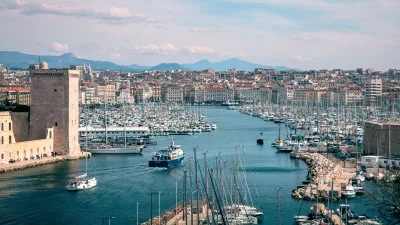
Marseille
Marseille is France’s oldest city, founded by Greek sailors around 600 BC, and today its second-largest. It’s a sunny, gritty and endlessly lively Mediterranean port. Life centres on the Vieux-Port, where fishermen still sell the morning catch, overlooked by the golden basilica of Notre-Dame de la Garde. Wander the steep lanes of Le Panier, the oldest quarter, visit the striking MuCEM museum on the waterfront, or take a boat to the Château d’If of The Count of Monte Cristo fame. Just outside the city, the turquoise coves of the Calanques National Park are perfect for hiking and swimming. And no visit is complete without a bowl of bouillabaisse, the city’s legendary fish stew. The gay scene is spread across the city rather than packed into one district. It mostly clusters around the Vieux-Port in the 1st arrondissement and the bohemian Cours Julien area in the 6th. L’Annexe Bar is proudly gay while welcoming everyone, and late-night dancing carries on at the legendary New Cancan club. Recurring parties are a big part of the scene, especially La Dégaine, now a fixture of Marseille’s queer nightlife. The community also has its own LGBTQIA+ Centre near the Vieux-Port, which opened at the end of 2023. The highlight of the year is Pride Marseille in early July. It has run since 1993 and draws 15,000–25,000 people for a march that’s both militant and festive, ending with a free concert at the City Hall and an all-night official party. It caps a full Pride Month of events across the city. France has had marriage equality since 2013, and Marseille’s easy-going, open-minded spirit makes it a welcoming destination for gay travellers.
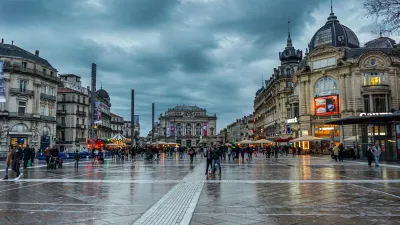
Montpellier
Montpellier is one of the fastest-growing cities in France. It’s sunny, young and lively, and sits just inland from the Mediterranean in the Occitanie region. Students make up a large share of the population, and the city is home to one of the oldest medical schools in the world, still teaching after more than 800 years. Life revolves around the grand Place de la Comédie and the Écusson, the medieval old town, a maze of honey-coloured lanes, hidden squares and café terraces. Walk up to the Promenade du Peyrou and its 18th-century aqueduct, see the Musée Fabre’s fine art collection, or explore Ricardo Bofill’s neoclassical Antigone district. Beaches are just a tram and bus ride away, and the vineyards of Pic Saint-Loup and the wild landscapes of the Camargue are close by. Montpellier has a reputation as one of France’s most gay-friendly cities. In 2013 it hosted the country’s very first same-sex wedding. The scene is compact and easy to walk, with most gay bars in the Écusson, especially around Place du Marché-aux-Fleurs and the Saint-Roch quarter. You can easily take in several bars in one evening before heading to Le Heaven, the city’s main gay club, which is busiest on Saturday nights. On weekends, the bars start filling up around 10 pm. The highlight of the year is the Marche des Fiertés (Pride) in June. Now in its fourth decade, it is one of the longest-running Prides in the south of France. The weekend starts with solidarity drinks with local associations, followed by a community village on the Esplanade du Peyrou and a colourful parade through the city centre. With its sunshine, open-minded spirit and laid-back Mediterranean pace, Montpellier is an easy and welcoming destination for gay travellers.
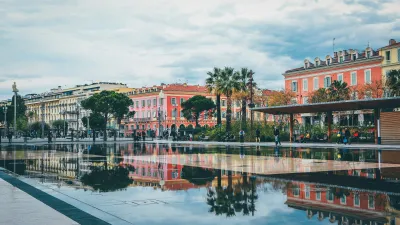
Nice
Nice is an ancient port city on the French Riviera, situated just a short distance from Monaco and the Italian border. France's fifth largest city, with a population of around 340,000 (or roughly one million when including the greater metropolitan area), Nice enjoys a mild Mediterranean climate and a sheltered position that made it a magnet for wealthy visitors as far back as the nineteenth century — particularly affluent British travelers and European aristocracy. The iconic Promenade des Anglais and the grand Hotel Negresco are lasting reminders of that gilded era. Thinkers and artists including Friedrich Nietzsche, Anton Chekhov, Henri Matisse, and Marc Chagall all spent time here, and today the city remains a cultural powerhouse along the Côte d'Azur, home to acclaimed art museums, major music events, and a rich architectural landscape. Nice has long been a welcoming destination for gay and lesbian travelers, and many LGBTQ+ people choose to make it their home. The city centre is where you'll find a concentration of gay bars and clubs, as well as the Centre LGBT Côte d'Azur, which serves as a community hub for local and visiting queer residents alike. The annual calendar offers several standout events, including the world-famous Nice Carnival each February, the Pride-spirited Pink Parade in summer, and two dedicated LGBT film festivals that draw audiences from across the region.
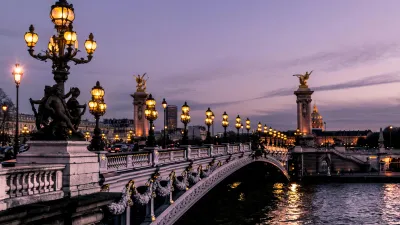
Paris
Few cities can rival Paris. It consistently ranks among Europe’s top three destinations, and for many of us it remains the most beautiful of them all. Much of Europe’s architectural heritage was lost during the Second World War, and many cities never fully recovered their former splendour. Paris, by contrast, came through largely intact, and more than eight decades later it still feels like a small miracle. This is a city that rewards curiosity. You could spend months here, or return year after year, and still stumble upon new corners worth discovering. Put the guidebook away now and then, wander without a plan, and let the side streets surprise you. When to go If you want more than the Louvre and the classic sights and hope to experience Paris the way Parisians live it, avoid August. It is the traditional holiday month, when much of the city leaves town and some businesses shut entirely. The gay scene feels it too: even the most popular bars and clubs can be half-empty or closed. Le Marais: the heart of gay Paris The Marais, a historic quarter in the 4th arrondissement, is the centre of gay life in Paris. Its charming, narrow lanes are steeped in centuries of history, and you’ll find a dense cluster of gay bars, plus plenty of gay-friendly restaurants, cafés and boutiques, almost all within easy walking distance of one another. Flirting, Parisian style Parisian men have a reputation for being hard to read. Show your interest too openly and you may come across as overeager. Our advice: don’t overthink it. There’s no need to study the local codes. Be yourself, flirt your own way, and don’t take the occasional Parisian aloofness personally. Locals also tend to go out in groups, so Paris is often more fun with friends, by day and by night. Pride The highlight of the year is Paris Pride, known in France as the Marche des Fiertés LGBT, held every summer.