
Italy
Cities
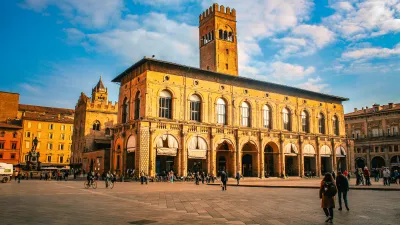
Bologna
Bologna, capital of Emilia-Romagna, has three nicknames: La Dotta (the learned), La Grassa (the fat) and La Rossa (the red). It is home to the world’s oldest university, founded in 1088, which keeps the city young and lively all year. Its red-roofed historic centre is lined with nearly 40 km of porticoes, now a UNESCO World Heritage Site, which lead you from Piazza Maggiore and the Neptune Fountain to the medieval Two Towers. It is also arguably Italy’s food capital: think tagliatelle al ragù, tortellini in brodo and mortadella, best enjoyed among the market stalls of the Quadrilatero. Bologna also has a special place in Italian gay history. Cassero was founded in 1982 in one of the medieval city gates, Porta Saragozza, and is today the community’s cultural and party hub at Via Don Minzoni 18, with a bar, a dance floor and a busy calendar of club nights, drag, theatre and film. The scene is compact, political and very welcoming. Start the evening at a central bar like Barattolo, then follow the night to Cassero or to the bigger club parties on the city’s outskirts. The two highlights of the year are Bologna Pride in June, one of Italy’s most activist-minded Prides, and the Gender Bender Festival in late October and early November, a ten-day celebration of queer dance, performance, film and parties. In summer, Cassero’s open-air season keeps the courtyard busy from May to September.
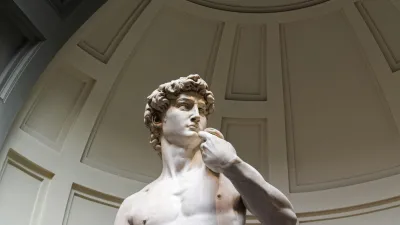
Florence
Florence is the birthplace of the Renaissance and one of the most beautiful cities in the world. Its compact historic centre, a UNESCO World Heritage Site, is an open-air museum: Brunelleschi’s dome crowns the Duomo, the Uffizi holds masterpieces by Botticelli and Leonardo, Michelangelo’s David stands in the Accademia, and the Ponte Vecchio, lined with goldsmiths’ shops, has spanned the Arno since the 14th century. Cross the river to the Oltrarno for artisan workshops, the Pitti Palace and the Boboli Gardens, then climb to Piazzale Michelangelo for sunset over the terracotta rooftops. Between visits, there’s bistecca alla fiorentina, Chianti wine and the stalls of the Mercato Centrale. The gay scene is small, relaxed and spread across the centre rather than packed into one district. The streets around Santa Croce have long been the heart of gay nightlife, and many locals also mix freely in the bars and piazzas of the Oltrarno, especially around Santo Spirito. Recently the scene has been changing, and several long-standing venues have closed. Party nights now play a bigger role, such as Mamamia, the city’s popular queer party, whose winter season runs at the Viper Theatre. For culture, don’t miss the Florence Queer Festival in November, one of Italy’s longest-running LGBTQ+ film festivals, organised by the local association IREOS. June brings Pride month: Toscana Pride moves between Tuscan cities each year, and in summer Arcigay Firenze’s Pride River festival brings queer events to the riverside. Italy has recognised same-sex civil unions since 2016, and Florence is a welcoming, easy-going city for gay travellers.
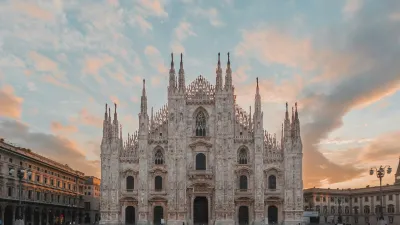
Milan
Milan is Italy's second largest city after Rome and the capital of Lombardy. It lies in the Po Valley, so the climate is mild, with warm summers and moderately cold winters. Founded by the Celts around 400 BC and taken by the Romans in 222 BC, the city was plundered and destroyed several times, and was razed completely by Frederick Barbarossa in 1162. It rose again under the Sforza family to become a leading city of the Italian Renaissance, and Leonardo da Vinci worked at their court for nearly 20 years. After Spanish and Austrian rule, it became part of the emerging Italian Kingdom in 1859. Since the 1980s Milan has been a thriving metropolis, leading in fashion, design and media. Milan Fashion Week takes place four times a year, and in menswear the city sets the tone ahead of Paris, New York and London. Culture is a big draw too. The Gothic Milan Cathedral, one of the largest churches in the world, stands out within Italian architecture for its colorful glass windows and the rooftop statues, including the four-meter gilded Madonnina, the city's symbol. Opera fans will want to see La Scala, the world's most famous opera house. Tickets are nearly impossible to get and individual visits are not allowed, so a guided tour is the way to see the interior. Milan has the biggest gay scene in all of Northern Italy. Bars and clubs are spread across the city, with a particular concentration around the Porta Venezia area. Annual highlights include Milan Gay Pride in June and the LGBTQ film festival MIX.
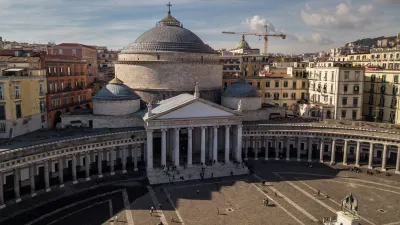
Naples
Naples, capital of Campania, is one of Europe’s oldest continuously inhabited cities, and its historic centre is a UNESCO World Heritage Site. It’s loud, chaotic, passionate and full of life. Stroll down Spaccanapoli, the straight street that cuts through the old town, past baroque churches and street shrines, then see the breathtaking Veiled Christ in the Cappella Sansevero or explore the ancient tunnels of Napoli Sotterranea. The National Archaeological Museum holds treasures from Pompeii and Herculaneum, both an easy trip away beneath the brooding silhouette of Vesuvius. This is also the birthplace of pizza. Eat it where it was invented, then walk the seafront Lungomare to Castel dell’Ovo, or take a ferry to Capri, Ischia or the Amalfi Coast. Naples has no gay village and few dedicated gay bars. Instead, the scene lives in the piazzas of the historic centre. Piazza Bellini is the main meeting point, and its bars spill out onto the square on warm evenings. Bar Fiorillo here is a long-time favourite, unofficially adopted by local gay men. Nightlife is driven more by events than by venues, so look out for pop-up and themed queer parties, especially in summer. The city also has a unique queer heritage: the femminielli have been part of Neapolitan popular culture for centuries. The highlight of the year is Napoli Pride at the end of June. The first edition was held in 1996, and it is now one of the biggest Prides in southern Italy. The parade winds through the historic centre and ends with a big concert in Piazza Dante. In the days before it, a free Pride Park fills the city with art, talks and parties. Italy has recognised same-sex civil unions since 2016, and Naples’ warm, open-hearted spirit makes it a welcoming city for gay travellers.
Rome
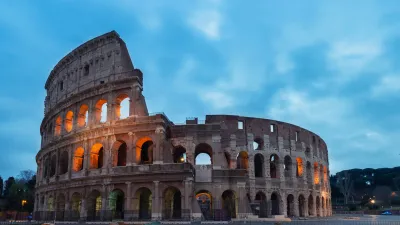
Rome is the capital of Italy, a big, free and democratic country, and a city famous for its ancient history, Roman soldiers and gladiators, and museums filled with sculptures of gorgeous men made by gay artists. For many gay visitors it carries a certain fantasy, though the reality is more complicated. Rome is a controversial place for gay men. Whether because of local mentality or the influence of the Vatican, the city's queer life is far less open and colourful than in many other European capitals. Things have begun to change, however, with newer generations of more open and self-confident gay men and women. This shows most clearly at the big annual Pride manifestation in June and at the LGBT festivals held during the summer, and there are also some good clubs and parties for gays in the city. Rome has no particular gay area, but the late-evening and night hotspot for the gay and lesbian community is the street in front of the cafe-bars Coming Out and My Bar on Via di San Giovanni in Laterano, sometimes called Rome's Gay Street. On warm summer nights it can be packed with hundreds of people.